C # programming and what you might not know about it

C # programming is always a field that attracts interest from many employers; therefore, there is an increasing number of programmers learning this programming language. Are you a “newbie” in the field? Join us to learn the basics of C # programming that any programmer should know.

Learn more: What is the application of Blockchain
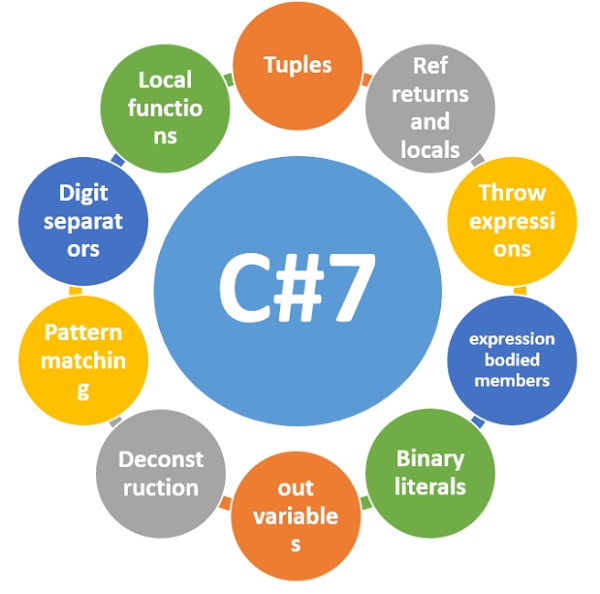
Some-futures-of-C-.jpg

What is C # programming language? 

C # is a purely object-oriented programming language. Developed by Microsoft, C # (pronounced C sharp) was first introduced in 2000 by Anders Hejlsberg. This is a very modern and powerful programming language.

Built on the basis of two strong programming languages namely C ++ and Java, C # is described as a combination of C ++, Visual Basic, Delphi and Java.

C # programming with the powerful support of .NET Framework makes it easy to create a Windows Fright or WPF (Windows Presentation Foundation) application.

Some features of C #

Why-C-.jpg

First of all, it is important to emphasize that C # is a purely object-oriented language. It’s pretty simple when compared to C ++ with about 80 keywords and more than a dozen built-in data types.

It provides component-oriented features such as Property, Event.

C# does not recommend using pointers as C ++ does, but if you want to use the pointers, it must be marked as unsafe. There must be a reason why C # is called the type-safe programming language. It checks the data thoroughly and manages the memory perfectly. It provides you with great support in management.

Garbage Collector of C# will reclaim objects that are no longer being used, clear their memory, and keep the memory available for future allocations.

Learn more: Blockchain and Its applications

Some remarkable advantages and disadvantages of C #

C # has many advantages such as:

Be close to common programming languages ​​such as C ++, Java, Pascal.

Be built on the foundation of powerful programming languages, thus ​​inheriting their advantages.

Improve the defects of C / C ++ such as pointers, side effects, etc.

Be easy to access, easy to develop.

Be powered by the .NET Framework.

The biggest downside of C # is that it runs only on Windows and requires the .NET Framework installation.

Operation for hardware is weaker than that of other languages and depends mainly on Windows.

Why C # ?

C # is a simple modern language. At the same time, it is quite powerful and flexible. Besides, C # is also user-friendly since it has few keywords and is empowered with all the strengths from its legacy softwares such as C ++ or Java.

Although every programming language has its own strengths, C # has been demonstrating to the world that it is capable of replacing some other languages ​​and becoming a versatile language.

Learn more: Software programming language

Basic ASP.NET MVC Programming

ASP.NET MVC is a Microsoft website development technology. The MVC model has helped us overcome many of the defects of Web Forms. This article gives you some basic theoretical introduction to ASP.NET programming and its applications.

Learn more: What is Blockchain Technology 3.0


What is ASP.NET MVC?

ASP.NET MVC (Model View Controller) is a new software development model that provides the second option for web building using ASP.NET. It is a framework built on the design of Model – View – Controller.

Where Model is the container of data, which supports better data transfer in the application.

View is the representation of its model. In Web Forms, that is the page, which receives data to display it to the users. At the same time it is also a form for users to interact with the system.
The third and most important part is the controller. It is the link between the users and system. Specifically, the controller receives user requests from the view and navigates the information if the data needs to be processed through the model, then again sends data from the model to View.

The MVC model also supports everything related to HTML, CSS and JavaScript, even better than the Web Form does.

Learn more: How does Blockchain platform work ?

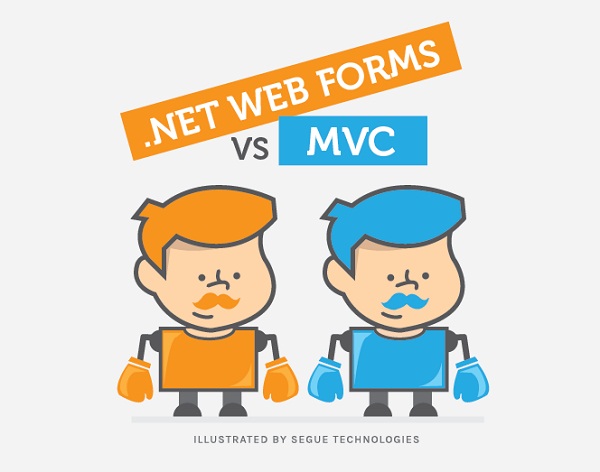
Comparing ASP.NET MVC and Web Forms

Comparing--ASP-NET.jpg

In terms of display and logic: In Web Forms, this relationship to greatly close, so it’s impossible to split the web interface completely. As a result, it will take longer if you need to change the interface. While we can separate them in an active way with MVC.

Web Forms uses Pages to display and create applications, while the MVC uses the Controller. Each controller corresponds to an actual object such as bill, customer, news, etc.

On state management side, Web Forms takes the entire control via the view state. MVC does not, which makes it easier to integrate with JavaScript.

Web Forms only supports STML, while MVC also supports others and you can use a lot of different displaying mechanisms.

One common analogy is that the mechanism for creating a common Web Forms page is master pages while MVC uses Layouts.

In Web Forms, if you want to create a new function and embed it somewhere so that you can use it for all applications, then you can use user controls whereas Partial Views is used in MVC.

What you might need when programming ASP.NET

What-you-might-need-when-programing-ASP-NET.jpg

After learning the definition and some concepts of ASP.NET programming, as well as what differs ASP.NET MVC from Web Forms, we will continue to learn about what to prepare for practical ASP.NET programming.

It’s not too complicated to build a web with ASP.NET MVC. Only some simple tools are required. First of all, you need a computer running on at least Windows 7 and .NET Framework 4.0.

Then Visual Studio should be installed- this is an integrated development environment (IDE) from Microsoft which is used to support .NET programming. It is highly recommended that you use version 2010 or later version.

Finally, in order to manage the database, you can use any data management system. However, SQL Server 2012 should be used (this is a relational database management system) for the best synchronization.

Learn more: What is the application of Blockchain

Blockchain software building and applications development

What is Blockchain?

Blockchain là gì

Blockchain, also known as block chain technology, is one of the main factors contributing to the success of bitcoin. The interest of fintech experts in blockchain was the cause of the continuous increase in bitcoin price during 2017. So what makes this technology so valuable?
Learn more: What is Blockchain Technology 3.0

First of all, blockchain solves the problem of information validation. Specifically, the blockchain is a shared list of records with all the transactions so that anyone on the network can see and have the right to verify the transaction. All information and transactions are recorded in blocks. And the advantage of blockchain is to ensure that the blocks have been recorded.

The blockchain is resistant to the modification of data. Whenever a new block is mined successfully, the whole system will be notified, thus ensuring the transparency and fairness of the information. The blockchain system consists of hundreds to millions of personal computers, making the database not only hierarchical but also independently distributed. It means that there is no central server on that peer-to-peer network where every node shares the equal rights.. Therefore, if one node fails to connect to the network or does not work any more, it will not affect the system in general.
Learn more: How does Blockchain platform work ?

Blockchain software building

Lap-trinh-pham-mem-block-chain.png

So it has completes the brief introduction to blockchain. It can be seen that blockchain can be applied to not only cryptocurrency but

many other aspects.

In fact, cryptocurrency is just one application of blockchain. Let’s think outside the box to see the unlimited potential of blockchain. Is it complicated to build a blockchain software?

Let’s start off with building the blocks. In blockchain, each block contains information such as a timestamp and an index (optional). The blocks will determine the hash for the completed process. Like bitcoin, each block’s hash will be a cryptographic one of the block’s index, timestamp, data, and the hash of the previous block’s hash. The data can be anything you want.

After having a block structure. We need to have the blocks linked together to create a blockchain. So how does each block have information of its previous block? Please pay attention to the genesis block, the first block of the blockchain. The genesis block does not contain the hash of its previous block (since it is the first block). It can be added manually or via a certain logic. We will create a function that simply returns a genesis block to make things easy. The index of this block is set to 0 and it has an arbitrary data value and an arbitrary value of  “previous hash” parameter.
Learn more: What is the application of Blockchain

It’s hard to provide a step-to-step guide to  building a blockchain software with the limited length of this writing. Therefore, only the brief introduction to blockchain software, the way it works and some programming tips are discussed in this piece of writing. If you are an experienced programmer, you can build a simple blockchain software base on these information.

Lập trình phần mềm blockchain và ứng dụng

Blockchain là gì ?

Blockchain là gì

Blockchain hay còn gọi là công nghệ chuỗi khối là một trong những yếu tố chính tạo nên sự thành công của đồng bitcoin. Sự quan tâm của giới tài chính công nghệ đến blockchain chính là nguyên nhân dẫn đến sự tăng giá liên tục của bitcoin vào năm 2017. Vậy điều gì khiến công nghệ này có giá trị đến vậy ?

Xem thêm: Công nghệ Blockchain 3.0

Trước hết blockchain giải quyết vấn đề xác nhận thông tin. Cụ thể là hệ thống blockchain ghi lại tất cả mọi giao dịch được diễn ra và tất cả mọi người có mặt trên hệ thống đều được thấy và có quyền xác minh tính chính xác của giao dịch đó. Mọi thông tin, giao dịch đều được lưu giữ trong các block hay còn gọi là khối trong một chuỗi thời gian. Và điểm ưu việt của blockchain chính là đảm bảo việc các khối đã được ghi lại.

Việc giả mạo hoặc thay đổi thông tin trong blockchain là gần như là không thể. Khi mỗi một khối xuất hiện, cả hệ thống sẽ được thông báo và điều này đảm bảo tính minh bạch và công bằng của thông tin. Hệ thống blockchain gồm hàng trăm đến hàng triệu máy tính cá nhân khiến cơ sở dữ liệu không chỉ phân cấp mà còn phân tán độc lập. Điều này có nghĩa là không có máy chủ và mọi người trong hệ thống đều có quyền hạn tương đương. Chính bởi vậy, việc ngừng hoạt động của một máy không làm ảnh hưởng đến hệ thống chung.

Xem thêm: Nền tảng Blockchain là gì

Lập trình phần mềm blockchain.

Lap-trinh-pham-mem-block-chain.png

Tạm hiểu vài nét về blockchain như vậy, ta thấy blockchain không chỉ xuất hiện trong giao dịch tiền ảo. Thực chất tiền ảo chỉ là một hình thức của nó. Nhìn xa hơn sang nhiều lĩnh vực khác ta mới thấy được tiềm năng vô hạn của blockchain. Vậy lập trình một phần mềm blockchain có phức tạp hay không?

Bắt đầu với việc tạo nên các khối. Trong blockchain, mỗi khối lưu trữ thông tin với một timestamp và một index (tùy chọn). Các khối sẽ tự xác định hash để quá trình lưu giữ được hoàn chỉnh. Mỗi hash của một block là giá trị băm mật mã học củablock’s index, timestamp, data, và hash của blocktrước đó.

Xem thêm: Ứng dụng Blockchain là gì

Sau khi có 1 cấu trúc khối. Chúng ta cần có những khối tiếp nối để nó trở thành chuỗi khối (blockchain). Vậy làm thế nào để mỗi khối chưa thông tin của các khối trước nó? Cần phải chú ý tới khối đầu tiên trong blockchain. Khối gene hay còn được gọi là khổi nguyên thủy bởi nó không chứa hash của khổi trước nó (vì nó là khối đầu tiên). Người ta có thể thêm nó vào bằng tay hoặc thông qua một logic nhất định. Chúng ta sẽ tạo ra một hàm chỉ đơn giản trả về một khối gene để làm cho mọi thứ trở nên dễ dàng. Index của khối này bằng 0 và nó có một giá trị dữ liệu tùy ý và một giá trị tùy ý trong tham số “trước hash”.

Thật khó để đưa ra công thức cụ thể từ A đến Z việc lập trình phần mềm blockchain cho bạn. Trong bài viết này chúng tôi chỉ cố gắng định nghĩa cho bạn về phần mềm blockchain là gì, nó hoạt động ra sao và một số gợi ý khi lập trình nó. Nếu bạn là dân lập trình đã có một số kinh nghiệm nhất định bạn có thể dựa vào đó để lập trình một phần mềm blockchain đơn giản.

Applying Blockchain to Vietnam agriculture – Should or shouldn’t?

The technology behind the famous Bitcoin – Blockchain, is creating a tech fever recently. It is expected to have a variety of applications in different fields including agriculture.

Blockchain is a peer-to-peer network of hundreds to millions of personal computers linked together to create a distributed ledger. So what can this network do for the agricultural sector?

Traceability


Traceability


Blockchain will solve the problem of validation and authentication information. Every transaction made along with its information and participated parties will be public for others to verify. Blockchain can also be the “one-time” solution for the trust issue. The information related to the products and transactions will be stored permanently in the system. People can easily track the origin of the goods, its supplier, and even the carrier or name of the ship that once involved in the transportation process.

Learn more: What is Blockchain Technology 3.0

In addition, the information in each blockchain block is designed to be immutable and needs to be verified by all nodes in the system, which made it trustable. This not only creates a high-quality-standard for agricultural products but also helps in increasing sales as consumers are no longer need to worry about products’ quality.

Financial instruments

Financial instruments

Using blockchain as a financial instrument in agriculture offers tremendous benefits for both suppliers and consumers. The blockchain platform will allow everything to be done automatically, which minimizes the cost of conventional manual operation. Moreover, blockchain 2.0 or advanced provides smart contract – an application of Blockchain minimizing errors during the trading process. Eliminating intermediaries, the agriculture sector can save up a lot from cutting costs.

Learn more: How does Blockchain platform work

Smart contract is a wise choice to avoid risks and to ensure farmers’ benefit. Trading will be much easier for producers, distributors, and sellers with the help of this technology. Full or partial contract payments can be made immediately through the confirmation and enforcement of the blockchain system. This would also allow farmers to be paid in full without breach of contract.

Increase the export value of agricultural products

Increase the export value of agricultural products


Import and export process is quite complicated with unnecessary procedures and intermediate stages. Payments are often made in foreign currencies such as US dollar, which can be risky and costly due to inflation and fluctuation. As a result, transaction costs in international commerce can be up to 15% -20% of the total value of the goods, which is a disadvantage for both exporters and importers.

Learn more: What is the application of Blockchain

The application of blockchain in general, as well as smart contract in particular, has set out a new path for international commerce. Blockchain will minimize complicated procedures, saving time, effort, money for users, as well as create “social capital”  that allow strangers to transact with each other. All transactions can be done quickly and easily with high accuracy and security. Payment will be made and contracts will not be violated with the help of Blockchain.

Summary

Applying high technology to agriculture has great effect and blockchain is no exception. The blockchain is the future of agriculture as it will reduce costs and enhances efficiency. In Vietnam, blockchain technology is gradually going into deployment but has yet caught up with others strong competitors in exporting agricultural products. It may be necessary to wait until the blockchain completely replaces the old management system to truly see the changes in agriculture in Vietnam.

Features of a blockchain

 A blockchain performs various functions which are supported by various features. These functions include but are not limited to transfer of value, managing assets and agreements. All of the blockchain tiers described in the previous section perform these functions with the help of features offered by blockchain, but with some exceptions. For example, smart contracts are not supported by all blockchain platforms, such as Bitcoin.

Lear more: What is Blockchain Technology 2.0

Another example is that not all blockchain platforms produce cryptocurrency or tokens, such as Hyperledger Fabric, and Multichain.

The features of a blockchain are described here:

  • Distributed consensus: Distributed consensus is the primary underpinning of a blockchain. This mechanism allows a blockchain to present a single version of the truth, which is agreed upon by all parties without the requirement of a central authority.
  • Transaction verification: Any transactions posted from the nodes on the blockchain are verified based on a predetermined set of rules. Only valid
  • transactions are selected for inclusion in a block.
  • • Platform for smart contracts:
  • A blockchain is a platform on which programs can run to execute business logic on behalf of the users. Not all blockchains have a mechanism to execute smart contracts, however, this is a very desirable feature, and it is available on newer blockchain platforms such as Ethereum and Multichain.
  • Smart Contracts
  • Blockchain technology provides a platformfor running smart contracts. These are automated, autonomous programs that
  • reside on the blockchain network and encapsulate the business logic and code needed to execute a required function when certain conditions are met. For example, thinkaboutan insurance contract where a claim is paid to the traveler if the
  • flight is canceled. In the real world, this process normally takes a significant amount of time to make the claim, verify it, and pay the insurance amount to the claimant (traveler). What if this whole process were automated with cryptographically-enforced trust, transparency, and execution so that as soon as the smart contract received a feed
  • that the flight in question has been canceled, it automatically triggers the insurance payment to the claimant? If theflight is on time, the smart contract pays itself.
  • This is indeed a revolutionary feature of blockchain, as it provides flexibility, speed, security, and automationfor real- world scenarios that can lead to a completely trustworthy system with significant cost reductions. Smart contracts can be programmed to perform any actions that blockchain users need and according to their specific business requirements.
  • • Transferring value between peers:
  • Blockchain enables the transfer of value between its users via tokens. Tokens can be thought of as a carrier of value.
  • • Generation of cryptocurrency:

 This feature is optional depending on the type of blockchain in use. A blockchain can create cryptocurrency as an incentive to its miners who validate the transactions and spend resources to secure the blockchain. We will discuss cryptocurrencies in great detail in Chapter Introducing Bitcoin.

  • • Smart property: It is now possible to link a digital or physical asset to the blockchain in such a secure and precise manner that it cannot be claimed by anyone else. You are in full control of your asset, and it cannot be double-spent or double-owned. Compare this with a digital music file, for example, which can be copied many times


Smart property

  • without any controls, while it is true that many Digital Rights Management (DRM) schemes
  • are being used currently along with copyright laws, but none of them is enforceable in such a way as blockchain based DRM can be. Blockchain can provide DRM functionality in such a way that it can be enforced fully. There are famously broken DRM schemes which looked great in theory but were hacked due to one limitation or another. One example is Oculus hack(http://www.wired.co.uk/article/ocu lus-rxft-drm-hacked).
  • Another example is PS 3 hack, also copyrighted digital music, films and e- books are routinely shared on the

internet without any limitations. We have copyright protection in place for many years, but digital piracy refutes all attempts to fully enforce the law on a blockchain, however, if you own an asset, no one else can claim it unless you decide to transfer it. This feature has far- reaching implications, especially in DRM and electronic cash systems where double-spend detection is a crucial requirement. The double-spend problem was first solved without the requirement of a trusted third party in Bitcoin.

  • • Provider of security: The blockchain is based on proven cryptographic technology that ensures the integrity and availability of data. Generally, confidentiality is not

Provider of security


•    
provided due to the requirements of transparency. This limitation is the leading barrier to its adoption by financial institutions and other industries that require privacy and confidentiality of transactions. As such, the privacy and confidentiality of transactions on the blockchain is being researched very actively, and advancements are already being made. It could be argued that, in many situations, confidentiality is not needed and transparency is preferred. For example, with Bitcoin, confidentiality is not an absolute requirement; however, it is desirable in some scenarios. A more recent example is Zcash, which provides a platform for conducting anonymous transactions. This scheme will be discussed in detail inChapter Alternative Coins. Other security services, such as non­repudiation and authentication, are also provided by blockchain, as all actions are secured using private keys and digital signatures.

  • • Immutability: This is another critical feature of blockchain: once records are added to the blockchain, they are immutable. There is the remote possibility of rolling back changes, but this is to be avoided at all costs as doing so would consume an exorbitant amount of computing resources. For example, with Bitcoin if a malicious user wants to alter

    Learn more: What is Blockchain Technology 2.0

  • previous blocks, then it would require computing the PoW once again for all those blocks that have already been added to the blockchain. This difficulty makes the records on a blockchain essentially immutable.
  • • UniquenessThis blockchain feature ensures that every transaction is unique and has not already been spent (double­spend problem). This feature is especially relevant with cryptocurrencies, where detection and avoidance of double spending are a vital requirement.

Learn more: What is Blockchain Technology 3.0

ĐẶC TÍNH CỦA BLOCKCHAIN

Một blockchain có thể thực hiện nhiều chức năng, và để làm được điều đó, cần có nhiều đặc tính hỗ trợ. Những chức năng này bao gồm nhưng không giới hạn từ việc chuyển giao giá trị, quản lý tài sản và thỏa thuận. Tất cả các thế hệ blockchain được đề cập ở mục trước đều thực hiện các chức năng này với sự hỗ trợ của những đặc tính của blockchain, tuy nhiên vẫn có những trường hợp ngoại lệ. Ví dụ, không phải nền tảng blockchain nào cũng hỗ trợ hợp đồng thông minh, ví dụ như Bitcoin. Một ví dụ khác đó là không phải tất cả các nền tảng blockchain đề tạo ra tiền thuật toán hoặc token, ví dụ như HyperLedger Fabric và MultiChain.

Xem thêm: Công nghệ Blockchain 3.0

Những đặc tính của một blockchain bao gồm:

  • Tính đồng thuận phân tán: đây là đặc tính đầu tiên của blockchain. Cơ chế này cho phép một blockchain có chức năng như một phiên bản đơn nhất của lòng tin, đạt được sự nhất trí của tất cả các bên tham gia mà không yêu cầu có máy chủ.
  • Xác thực giao dịch: bất kỳ giao dịch nào được các node đưa lên blockchain đề phải được xác minh dựa vào một số luật có sẵn. Chỉ những giao dịch hợp lệ mới được thêm vào block.
  • Nền tảng cho hợp đồng thông minh:  một blockchain là một nền tảng để các chương trình chạy trên đó và thực hiện các logic kinh doanh thay mặt người dùng. Không phải blockchain nào cũng có một cơ chế khởi chạy hợp đồng thông minh, tuy nhiên, đây là một đặc tính đáng có, và nó có ở những nền tảng mới như Etehreum và Multichain.

 Hợp đồng thông minh

Blockchain cung cấp nền tảng để khởi chạy hợp đồng thông minh. Đây là những chương trình tự động, ẩn danh chạy trên nền tảng blockchain và thực hiện những logic kinh doanh và code cần thiết để thực hiện một chức năng nào đó khi đáp ứng một số điều kiện nhất định. Ví dụ, hãy nghĩ đến một hợp đồng bảo hiểm mà hành khách sẽ được nhận đền bù khi chuyến bay bị hủy. Trong cuộc sống thực, việc này sẽ mất khá nhiều thời gian để đi đến kết luận cuối cùng, cần phải xác minh, trả tiền cho người nhận đền bù (hành khách). Điều gì sẽ xảy ra nếu toàn bộ quá trình này được tự động hóa với sự tin tưởng, minh bạch và được thực hiện nhờ quá trình mật mã hóa giúp cho hợp đồng thông minh nhận được thông tin rằng chuyến bay đã bị hủy và nó sẽ tự động thực hiện thanh toán đền bù cho hành khách? Nếu chuyến bay khởi hành đúng giờ, hợp đồng thông minh sẽ tự thanh toán cho nó.

Đây thực sự là bước đột phá mang tính cách mạng của blockchain khi nó mang lại sự linh hoạt, tốc độ, bảo mật và tự động hóa không thế giới thật. Điều này có thể tạo nên một hệ thống được tin tưởng tuyệt đối mà vẫn cắt giảm được chi phó. Hợp đồng thông minh có thể được lập trình để thực hiện các hành động mà người dùng cần và tùy theo từng yêu cầu kinh doanh cụ thể.

Xem thêm: Nền tảng Blockchain là gì

  • Chuyển đổi giá trị giữa các người dùng: blockchain cho phép người dùng chuyển giá trị cho nha thông qua tokens. Tokens có thể coi là vật mang giá trị.
  • Khởi tạo tiền thuật toán: đặc tính này mang tính tùy chọn, tùy vào từng loại blockchain được sử dụng. Một blockchain có thể tạo tiền thuật toán như một phần thưởng để các miner tham gia hợp lệ hóa các giao dịch và dùng tài nguyên đó bảo vệ blockchain. Ta sẽ bàn về tiền ảo ở chương 5, Giới thiệu về Bitcoin.
  • Tài sản thông minh: hiện nay ta có thể liên kết một tài sản thực và một tài sản số trên blockchain một cách an toàn và chính xác, mà trước nay không ai có thể làm được. Bạn có thể quản lý tài sản của mình và nó sẽ không bị chi tiêu 2 lần (double-spent) hay thuộc sở hữu của 2 ng (double-owned). Khi so sánh điều này với một file nhạc số, file nhạc số có thể bị sao chép nhiều lần mà không ai kiểm soát được. Mặc dù digital rights management (DRM) (cơ chế quản lý các quyền trên mạng điện tử) được sử dụng song hành cùng luật bản quyền, không có luật nào có hiệu lực theo cách một cơ chế DRM trên nền tảng blockchain có thể làm được. Blockchain mang đến những tính năng khiến DRM có thể được thực thi đầy đủ. Cũng có nhiều cơ chế DRM gặp lỗ hổng khi chúng có vẻ rất tuyệt về mặt lý thuyết nhưng lại bị hack do một hoặc một vài hạn chế nào đó. Một ví dụ là lần tấn công Oculus (http://www.wired.co.uk/article/oculus-rift-drm-hacked).


Tài sản thông minh

Một ví dụ khác là PS3 hack, cũng liên quan đến nhạc số, phim và e-book đã được đăng ký bản quyền nhưng lại được lan truyền tràn lan trên mạng. Ta đã thực hiện nhiều phương pháp bản về quyền bản quyền trong suốt nhiều năm nhưng hành động vi phạm bản quyền điện tử đã đập tan mọi nỗ lực thi hành luật trên cơ sở blockchain. Tuy nhiên, nếu bạn sở hữu một tài sản, không ai ngoài bạn có thể quyết định chuyển đổi nó. Đặc tính này có vẻ nghe xa vời đặc biệt là trong DRM và hệ thống tiền số khi nó yêu cầu phải phát hiện ra hành vi double-spending. Vấn đề về double-spending lần đầu tiên được giải quyết mà không cần đền một bên thứ 3 được tin tưởng trong hệ thống Bitcoin.

  • Nhà cung cấp bảo mật: blockchain được xây dựng trên công nghệ mật mã đã được chứng minh có thể đảm bảo tính toàn vẹn và khả dụng của dữ liệu. Nhìn chung, việc bảo mật hoàn toàn là không thể do những yêu cầu về tính minh bạch. Hạn chế này chính là rào cản để nó được các cơ quan tài chính  và các nền công nghiệp khác chấp nhận vì họ yêu cầu quyền riêng tư và tính bảo mật của các giao dịch. Do đó, vấn đề quyền riêng tư và bảo mật của giao dịch trên nền tảng blockchain đã trở thành một vấn đề nghiên cứu nhiều người quan tâm và họ cũng đạt được 1 số thành tựu. Trong một số trường hợp, người ta lại tranh cãi rằng tính bảo mật là không cần thiết và tính minh bạch cần được ưu tiên hơn. Ví dụ, với Bitcoin, bảo mật không là một yếu tố  hoàn toàn bắt buộc; tuy nhiên, trong 1 số trường hợp thì nó là yếu tố cần có. Một ví dụ gần đây là Zcash, dự án này cung cấp nền tảng để thực hiện các giao dịch ẩn danh. Hệ thống này sẽ được bàn luận kỹ hơn ở chương 8, Altcoin.Các dịch vụ bảo mật khác như không thể phủ nhận và xác thực thông tin cũng có thể được blockchain cung cấp, bởi tất cả hoạt đồng đều được bảo mật nhờ sử dụng private key và chữ ký điện tử.


Nhà cung cấp bảo mật


  • Không bỏ đi được: đây là một đặc điểm vô cùng quan trọng của blockchain: một khi thông tin được thêm vào blockchain, chúng sẽ không thể bị xóa đi. Thực chất vần có khả năng để thu hồi lại thông tin đó, nhưng người ta sẽ tránh nó bằng mọi giá bởi việc làm này sẽ tiêu tốn một lượng tài nguyên tính toán lớn. Ví dụ, với Bitcoin, nếu một người dùng gian lận và muốn thay đổi các block trước đó, việc này sẽ yêu cầu việc tính toán Pow phải tính lại một lần cho tất cả các block đã được thêm vào blockchain. Chính sự khó khăn này khiên cho nhưng thông tin một khi được thêm vào sẽ  rất khó thu hồi lại.
  • Sự độc đáo: đặc điểm này đảm bảo mỗi giao dịch đều là duy nhất và chưa từng được chi tiêu trước đó (vấn đề chi tiêu 2 lần- double spending). Đặc điểm này đặc biệt liên quan đến vấn đề tiền ảo, nơi có yêu cầu khắt khe về vấn đề phát hiện và phòng chống double spending.

Xem thêm: Ứng dụng Blockchain là gì

Tiers of blockchain technology

In this section, various layers of blockchain technology are presented. It is thought that due to the rapid development and progress being made in blockchain technology, many applications will evolve. Some of these advancements have already been realized, while others are anticipated in the near future based on the current rate of advancement in blockchain technology.

Learn more: What is the application of Blockchain

The three levels discussed here were initially described in the book Blockchain: Blueprint for a New Economy Melanie Swan, O’Reilly Media, 2015 as blockchain tiers categorized by applications in each category. This is how blockchain is evolving, and this versioning shows different tiers of evolution and usage of blockchain technology. In fact, all blockchain platforms, with limited exceptions, support these functionalities and applications. This versioning is just a logical segregation of various blockchain categories based on the way that they are currently being used, are evolving, or predicted to evolve.
Also note that this versioning is being presented here for completeness and for historic reasons, as these definitions are somewhat blurred now, and with the exception of Bitcoin (Blockchain 1.0), all newer blockchain platforms that support smart contract development can be programmed to provide the functionalities and applications mentioned in all blockchain tiers: 1.0,2.0,3.0, and beyond.

Learn more: Blockchain and Its applications

In addition to Tier 1, Tier 2 and Tier 3, or Tier X in the future, the following represents my own vision of what blockchain technology eventually could become as this technology advances:

  •   Blockchain 1.0: This tier was introduced with the invention of Bitcoin, and it is primarily used for cryptocurrencies. Also, as Bitcoin was the first implementation of cryptocurrencies, it makes sense to categorize this first generation of blockchain technology to include only cryptographic currencies. All alternative cryptocurrencies as well as Bitcoin fall into this category. It includes core applications such as payments and applications. This generation started in 2009 when Bitcoin was released and ended in early 2010.

Blockchain Technology 1.0


  •   Blockchain 2.0: This second blockchain generation is used by financial services and smart contracts. This tier includes various financial assets, such as derivatives, options, swaps, and bonds. Applications that go beyond currency, finance, and markets are incorporated at this tier. Ethereum, Hyperledger, and other newer blockchain platforms are considered part of Blockchain 2.0. This generation started when ideas related to using blockchain for other purposes started to emerge in 2010.

Blockchain Technology 2.0

•   Blockchain 3.0: This third blockchain generation is used to implement applications beyond the financial services industry and is used in government, health, media, the arts, and justice. Again, as in Blockchain 2.0, Ethereum, Hyperledger, and newer blockchains with the ability to code smart contracts are considered part of this blockchain technology tier. This generation of blockchain emerged around 2012 when multiple applications of blockchain technology in different industries were researched.

Blockchain Technology 3.0

•   Blockchain X.0: This generation represents a vision of blockchain singularity where one day there will be a public blockchain service available that anyone can use just like the Google search engine. It will provide services for all realms of society. It will be a public and open distributed ledger with general-purpose rational agents {Machina economicuỉ) running on a blockchain, making decisions, and interacting with other intelligent autonomous agents on behalf of people, and regulated by code instead of law or paper contracts. This does not mean that law and contracts will disappear, instead law and contracts will be implementable in code.

Machina Economicus is a concept which comes from the field of Artificial Intelligence (AI) and computational economics. It can be defined as a machine that makes logical and perfect decisions. There are various technical challenges that need to be addressed before this dream can be realized.

Learn more: Blockchain application in Medical

The Technology Behind Bitcoin and Cryptocurrency

 There are quite a few applications for blockchain platforms, which we did discuss earlier, but it was a technology that was designed to work with the Bitcoin network to make sure that this network would be transparent but still allow for the security that people were looking for. Because of all this, it is common for people to assume that blockchain and cryptocurrencies are the same.

Learn more: What is the application of Blockchain

There are some big differences between the two, and they are not the same. To start, Bitcoin is a type of digital currency that you can use to make purchases and send money all around the world. You can choose to join in the Bitcoin network, or with one of the other digital currencies, and then you would use those coins to make purchases and so on. This is a currency that is only found online, so you will never be able to print the currency and use it at your favorite stores that you can with traditional money. But many find this as a benefit because they can just find the stores they want to use online and then make their purchases.

There are quite a few benefits that come with using Bitcoin. You can make sure that the government stays out of your transactions, you can save money with the international trade because you will not need to deal with expensive intermediaries, and you will be amazed at how quickly these transactions can be finished.


The blockchain is a bit different, and it is described as a distributed ledger. It is in charge of keeping track of all sorts of transactions, and it can be set up to hold onto anything that is considered valuable, when someone enters new

information into the blockchain, it is really hard to change this information later; you can only change the information if you get control of over half the computers on the network. This will make sure that the network is safe and that no one can go through and make changes to the transactions that are found on the blockchain.

Now, these two technologies can help out each other, and in fact,blockchain was released at the same time as Bitcoin to help this currency run. Since there is not a big bank or other government agency around to run the country, Bitcoin, as well as some of the other digital currencies that are out there, needed to have something in place that would build up the trust that users needed. Without blockchain being around, it would be hard to convince people that their transactions are safe and they would not be likely to use the system at all.

While these two are different types of technologies, it is unlikely that digital currencies would be as successful as they are today if blockchain was not around to help things out. Many people would choose to not go with these because they wanted to make sure that their money was as safe as possible. Blockchain adds that element of trust without people having to worry about whether someone can see his or her information, whether he or she needs that third party to help out, or something else.

Learn more: Blockchain and Its applications

Does blockchain really help digital currencies?

Does blockchain really help digital currencies

The big question now is how blockchain really works to help make these digital currencies successful. To understand how this happens, we will first need to take some time to look at how blockchain runs We talked about this a bit earlier in the guide, but there is a lot more that comes into play so let’s take a look.

To review, a blockchain is basically going to be a database that can hold onto all of the transactions that occur on the Bitcoin network. The full copy of the blockchain, such as the one that you will find on the Bitcoin network, is going to contain each transaction that has ever occurred on the network since it started. With this information, it is possible for any users that would like to, to find out information on the transactions that go on within the network.

Now, this system is also set up to add in some security so that people can keep their information as safe as possible. Every block will be given a hash that is unique but which is still based on some of the information from the previous block (the miners are going to be responsible for this kind of work). This will end up creating a big chain of blocks that are meant to connect together in perfect order from start to finish. Through this particular method, each block is going to be in the right order, or there would be some issues with the hashes present.

Once a new block is added into the blockchain, it is then impossible to make any modifications to the transactions in that block. To try and make changes would mean that the hash for each block that came after it would have to be changed as well and this would result in a big mess. This is how things are supposed to be though. The creators came up with this system because they do not want to allow someone to enter the network and make changes without being quite noticeable.

Honest generators, who are known as the miners, will only be able to build on a new block if it is the newest block on the longest valid chain. The length is going to be calculated as a total to the combined difficulty in that chain, rather than how many blocks, although this distinction is not really that important except for

a few types of attacks. A chain will be considered valid if all the transactions and the blocks that are found inside of it are valid, and only if there is the right genesis block in place.

If this process has gone smoothly with no issues along the way, all the blocks will lead all the way back to the genesis block without any issues. However, it is possible for this genesis block to have some forks inside of it, so there can be different directions. One-block forks are created when two blocks have been developed at the same time. If this does happen, the generating nodes will work to build on the block that they received first. And then there are times when a bigger fork will show up because the program was working to fix some bugs in the system.

Blocks that are near the end of some of the longer chains can be added to the main part because they do add some more value. However, if we are dealing with some blocks that are on shorter trains, which are sometimes called invalid chains, they are going to be left alone and not used. If the user of Bitcoin switches over to one of the longer chains, all of the ones on that shorter chain can then be queued so that they can be added in as well.

As this illustrates, there are quite a few ways that this amazing technology can benefit the users of digital currencies. This process is complex, but it shows what is going on each time you complete a transaction on the Bitcoin network, and it will help to keep your information safe and secure, which is why Bitcoin really needs the platform to work well.

Bitcoin netwok

Now, you may be wondering how you would get one of these blocks to get started and to keep your information secure, when you decide to join the Bitcoin

network, you will receive your own unique address and an invitation to the network. Then that first block is going to be sent to you automatically. Depending on how many transactions that you complete, you will be able to fill up that block over so much time. Each block can hold onto a certain amount of transactions, and sometimes this will take a while based on how busy you are on the network.

After the block has some time to fill up, it will be time for that block to become a part of the permanent record and join the rest of the chain. Your chain may be long if you do many transactions on this network, but it could also be a bit smaller if you only get on the Bitcoin network on occasion. Over time, as they join the permanent record, these personal chains will be added into the big blockchains so that everything remains safe.

As we mentioned, this is where the miners are going to need to get to the work. They are in charge of creating some unique codes, or hashes, that will help hide the personal information inside of the blocks, while still keeping the information transparent. The new blocks will have hashes that link them back to the block in front of it and so on down the line. There are also some other requirements that are in place for creating these hashes, which will help to make sure that no one can mess with the system.

When the miners are successful for the work that they are doing, they will be rewarded with 25 Bitcoin. With how high the value of Bitcoin is today, this can be a good reward for helping to keep the whole network safe. The miners will receive a monetary reward for their work, and all of the Bitcoin users will know that their information is safe.

When the block has been given a new hash, it will then be sent on to join the

main blockchain, and it will then be a part of the permanent records. Users can then check out all of the information that is there and make sure that all transactions are in the right place at the right time whenever they would want. Thanks to the work of the miners, and the basics of the blockchain system, your information is always going to be safe when using Bitcoin.

Blockchain has really made a difference in how Bitcoin and other digital currencies work. Blockchain has a lot of different applications, and it is already being developed to use in various industries throughout the world, but without it, Bitcoin would end up failing because it would not have a way to build up trust with the users.

Learn more: Blockchain application in Medical
The Future of Blockchain – Shaping Tomorrow ( P2 )

There are many ways in which blockchain is able to change the future. We have already spent some time discussing how this technology is going to be developed into a lot of different platforms in the future, making it more readily available to many different industries. This alone is going to change the future of blockchain. But many other changes could occur with blockchain based on how the users would like the technology to be developed.

Learn more: What is the application of Blockchain

In Capital Markets

When it comes to capital markets, interest in blockchain has already been expanding for several years with investment in this sector doubling between 2014 and 2015 and then doing so again between 2015 and 2016. This is largely because most of the advances in this market over the past few decades have been largely in the front-office while the back and middle office have remained more or less as inefficient and cumbersome as they have been since the general best-usage computer practices were standardized sometime in the 90s. This is what leads to the confounding scenario of trading an asset instantaneously and then waiting for days for things to settle officially.

Learn more: Blockchain and Its applications

Luckily, the Linux Foundation is on the case and working to bring together capital market firms and blockchain companies to develop standards that make blockchain technology even more useful in the capital markets. Rather than completely changing the capital market infrastructure, it is more likely that blockchain technology will end up working within it in such a way that it will remove much of the current inefficiency lingering in the system. It will also allow for those in this field to offer new and improved ways of offering services to clients while regulators will find new ways to optimize settlement and execution while increasing transparency to levels that have never before been dreamed of. Much of this will be due to the way that smart contracts can work to improve efficacy at virtually every level of the process.

In Banking Sector


When it comes to looking to the future of a blockchain based banking sector, you really need to look no further than China who is the first country to create its own digital currency that can scale as needed based on the demands of the current load, while all of the details on this currency have yet to be released to the rest of the world, the information that is already available indicates that the People’s Bank has already tested the currency with transactions between the People’s Bank and numerous private banks. It is believed that the new currency will be rolled out along with the renminbi, though an actual timetable is unknown as of the fall of 2 017.

This launch will mark a serious benchmark for cryptocurrencies and will mark the first major step towards blockchain technology going truly mainstream. The rollout of the service will also help to test the technical and logistical challenge that banks everywhere will eventually need to overcome to be successful in the post-blockchain world. It will also be interesting to see how a truly digital fiat currency will affect transaction costs as it will be the first cryptocurrency that is for all intents and purposes the same as a bank note. Finally, it also marks an extremely momentous occasion in that it marks the closest that millions of Chinese citizens have even been to having access to the type of banking services that some portion of the world takes for granted. Providing this access to those who have been denied it around the world is going to have serious worldwide repercussions whose reach is impossible to estimate.

In Digital Transactions

When it comes to digital transactions in general, it is likely that blockchain technology is going to reach a point relatively soon where its core values are tested. The United States Federal Reserve System is currently working on its own form of

cryptocurrency that is tentatively being called Fedcoin. It has held several closed-door meetings with a variety of prominent members of the blockchain community, several of which have been headed by the chair of the Federal Reserve herself. Fedcoin will help to solve the problems that the US government has had with cryptocurrency for years, mainly that it is a natural outlet for those who are looking to engage in shady activities on the

internet without leaving a paper trail. As such, when it premieres, Fedcoin will be promoted as an official alternative to bitcoin that users can buy into at a one to one ratio with dollars.

By and large, the Fedcoin blockchain will work in just the same way that the standard cryptocurrency blockchain works now, but with a few important differences. First, each Fedcoin account will be tied to information that the government has access to, making anonymity a thing of the past and destroying one of the primary things that made people want to use it in the first place. This will also have the effect of putting a timer on the end of paper money which is also difficult to track in most instances. Additionally, the Federal Reserve will have full control over the Fedcoin blockchain which means that if they do not like a particular transaction they can simply delete it from the blockchain and revert the funds back to their original location. The public reception to the rollout of this currency will determine a lot about the way that blockchain technology will be used for digital transactions in the future.

Learn more: Blockchain application in Medical